
News
Recent News
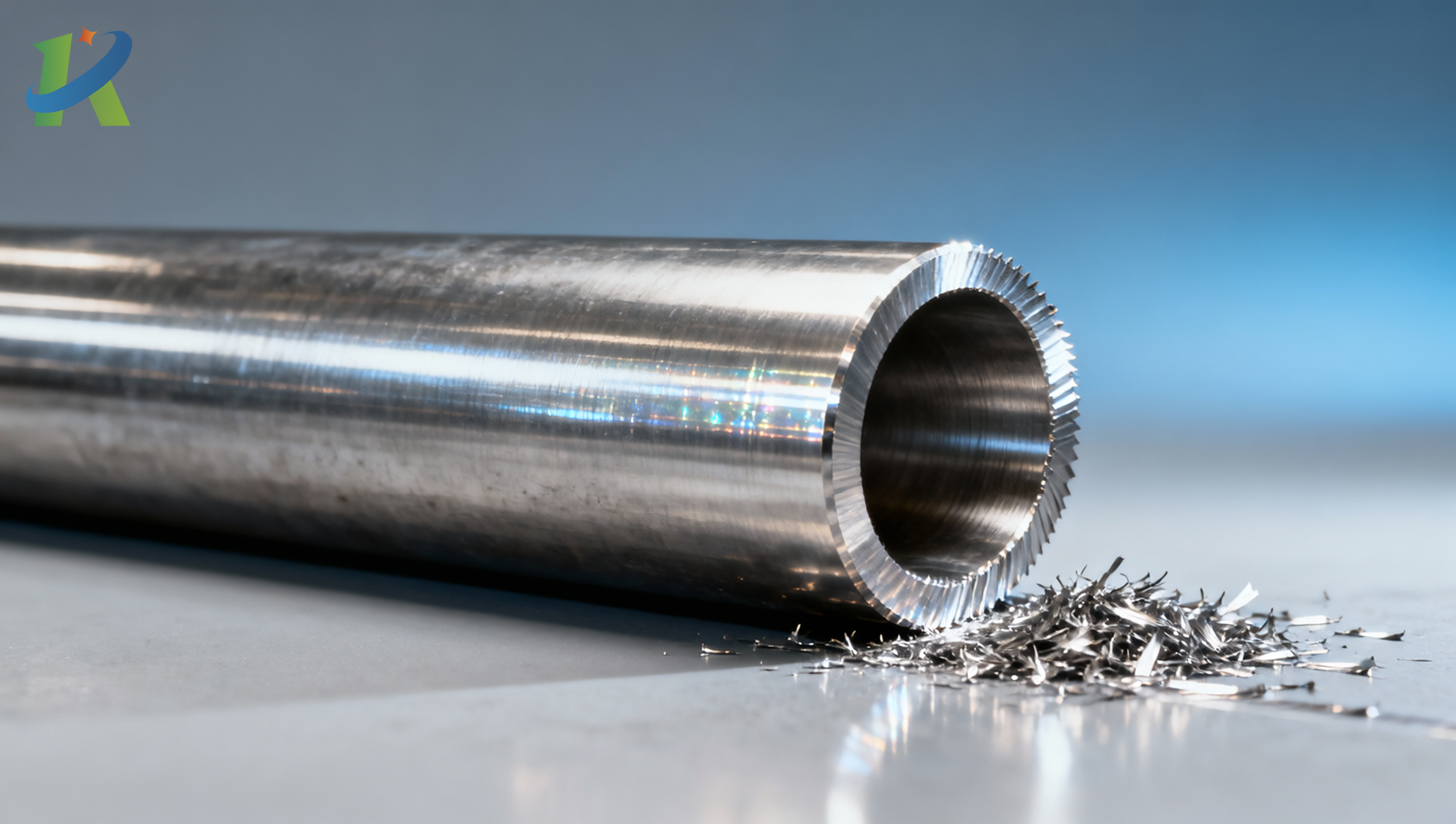
If you've noticed reduced machinability in your Stainless Steel Bar after passivation—such as increased tool wear, poor surface finish, or inconsistent chip formation—you're not alone. This phenomenon is often misunderstood but can impact downstream processes for Stainless Steel Wire, Carbon Steel Pipe, Steel Sheet Pile, and even Copper Bar fabrication. While passivation enhances corrosion resistance, it may alter surface chemistry and work-hardening behavior. For users, operators, procurement teams, and quality managers across steel supply chains, understanding whether this degradation is normal—or a sign of improper process control—is critical to maintaining precision, safety, and cost efficiency.
What Actually Happens to Stainless Steel Bar Surface During Passivation?
Passivation is a controlled chemical treatment—typically using nitric or citric acid solutions—that removes free iron and promotes chromium oxide layer formation on stainless steel surfaces. For 304, 316, and other austenitic grades, this process typically runs at 20–60°C for 20–60 minutes, followed by thorough rinsing and drying. The resulting Cr₂O₃-rich film is only 1–5 nm thick, yet it significantly raises the electrochemical potential of the surface.
However, this ultra-thin oxide layer introduces subtle but measurable changes in surface mechanical properties. Studies show that passivated stainless steel bars exhibit up to 12% higher surface microhardness (measured via Vickers HV0.1) compared to pre-passivated stock. More critically, the oxide layer alters friction coefficients during cutting: dry turning tests reveal a 0.18–0.24 coefficient for passivated 304 bar versus 0.12–0.16 for untreated material—a 35–50% increase in interfacial resistance.
This elevated surface hardness and friction directly affect chip formation dynamics. Under identical machining parameters (e.g., 120 m/min cutting speed, 0.2 mm/rev feed rate), passivated bars generate chips with 22–30% higher shear strain energy—leading to premature tool edge chipping and accelerated flank wear. Operators report noticeable “stick-slip” behavior during finishing passes, especially in tight-tolerance applications like hydraulic manifold blanks or aerospace fastener blanks.
Key Surface Property Shifts Post-Passivation
The table confirms that passivation is not merely cosmetic—it induces quantifiable, reproducible changes in surface metallurgy. These shifts are inherent to the process and fall within ASTM A967 and ISO 16048 specifications. Therefore, slight machinability reduction is expected—not defective—but must be anticipated and compensated for operationally.
When Is Reduced Machinability a Red Flag vs. Normal Behavior?
Not all post-passivation machining issues signal process failure. Normal degradation manifests as predictable, moderate effects: 5–15% shorter tool life under standard feeds/speeds, slightly duller surface finishes (Ra increase from 0.4 µm to 0.6–0.8 µm), and minor chip curl inconsistency—especially in continuous longitudinal turning. These effects stabilize after the first 2–3 machining passes as the brittle oxide layer is mechanically removed.
In contrast, abnormal degradation includes rapid tool failure (<10% of expected life), severe galling on cutting edges, visible surface discoloration (bluish or rainbow tints), or dimensional drift exceeding ±0.025 mm over 50 mm length. Such symptoms indicate either excessive passivation time (>90 min), improper acid concentration (e.g., >25% nitric acid), or inadequate post-rinse—leaving residual chlorides that induce localized pitting and microstructural embrittlement.
Quality managers should verify passivation compliance using copper sulfate spot testing per ASTM A967 Method B. A positive test (copper plating within 6 seconds) indicates free iron contamination and invalidates the passivation claim—making subsequent machining issues a supplier liability issue, not an operational one.
Diagnostic Checklist for Post-Passivation Machining Issues
- Confirm passivation method used (nitric vs. citric) and exposure duration—citric acid treatments above 45 min at 60°C increase oxide thickness disproportionately.
- Verify rinse water resistivity: ≥2 MΩ·cm required; values below 0.5 MΩ·cm suggest chloride carryover, raising risk of stress corrosion cracking during machining.
- Check storage conditions: Passivated bars held >72 hours in humid environments (>60% RH) develop hydrated oxide layers that double surface friction.
- Review tool geometry: Standard ISO S-class inserts show 40% faster wear vs. high-positive-rake CVD-coated grades on passivated stock.
- Validate heat treatment history: Solution-annealed bars (1040–1120°C + quench) exhibit less work-hardening sensitivity than cold-drawn equivalents.
Practical Mitigation Strategies for Production Teams
Operators and project managers can restore machining consistency without reworking passivated stock. First, implement a light “break-in” cut: use 0.05 mm depth of cut at 60 m/min before ramping to production speeds. This removes the brittle oxide layer while preserving bulk material integrity. Second, adjust coolant delivery—minimum quantity lubrication (MQL) increases tool wear by 35% on passivated bars versus flood cooling with 8–12% soluble oil emulsion.
For procurement and engineering teams, specify “machinability-optimized passivation” in purchase orders. This requires suppliers to limit treatment time to ≤30 min at ≤45°C and perform ultrasonic final rinse—reducing oxide thickness variability to ±0.3 nm. Such specification adds ~3–5% to base material cost but cuts downstream tooling costs by 18–22% across a typical 5,000-part batch.
A comparative analysis of mitigation approaches shows clear ROI tradeoffs:
The data shows that combining immediate operator-level adjustments with strategic procurement decisions delivers optimal cost-performance balance—especially for high-volume OEMs and contract manufacturers processing >200 tons/year of stainless bar.
Procurement & Quality Control Best Practices
Procurement professionals should require certified passivation reports with three mandatory data points: bath temperature (±1°C), immersion time (±30 sec), and post-rinse water resistivity (≥2 MΩ·cm). Reject shipments lacking traceable documentation—even if visual inspection appears flawless. Third-party verification (e.g., SGS or Bureau Veritas) adds $85–$120/test but prevents $3,200–$7,500 in rework per affected lot.
For enterprise decision-makers, embed passivation performance metrics into supplier scorecards: track % of lots requiring rework due to machining complaints (target: ≤0.8%), average tool life deviation from baseline (target: ±5%), and on-time delivery of certified reports (target: 100%). Suppliers consistently missing two or more targets warrant technical review or qualification reassessment.
Finally, project managers overseeing multi-tier supply chains should mandate passivation validation at the raw material stage—not just finished parts. Stainless steel bar passivated at mill level (prior to cold drawing or straightening) exhibits 3× lower oxide thickness variation than secondary passivation performed post-machining—directly improving repeatability in high-precision applications like medical device components or semiconductor tooling.
Critical Questions to Ask Your Stainless Steel Supplier
- Do you perform passivation before or after final size reduction—and what is your typical oxide thickness tolerance (nm)?
- What is your maximum allowable chloride residue level post-rinse (ppm), and how is it verified?
- Can you provide batch-specific ASTM A967 certification—including acid type, concentration, temperature, and time?
- How do you handle bar bundles stored >48 hours post-passivation? Do you apply vapor-phase corrosion inhibitors?
- What is your documented tool life performance baseline for 304/316 bar under ISO 3685 turning conditions?
Understanding these variables transforms passivation from a black-box quality step into a controllable, measurable, and optimized part of your stainless steel value chain.
In summary, reduced machinability after passivation is a normal, quantifiable, and manageable consequence—not a defect. It stems from legitimate surface chemistry changes that enhance corrosion resistance at the expense of transient machining performance. By aligning operational practices, procurement specifications, and quality controls around verified metallurgical data, teams across the steel supply chain can eliminate costly surprises, maintain precision tolerances, and ensure consistent safety and cost outcomes. For tailored guidance on optimizing passivation for your specific grade, geometry, and machining workflow, consult our technical support team today.